
You’ve seen it on menus, food blogs, and Instagram captions — sometimes spelled antipasto, sometimes antipasta. Which one is right? Are they the same thing, or is one of them a mistake?
The short answer: antipasto is correct. Antipasta is a common misspelling. This guide breaks down the meaning, origin, pronunciation, and correct usage — so you never second-guess it again.
Antipasta vs Antipasto – Quick Answer
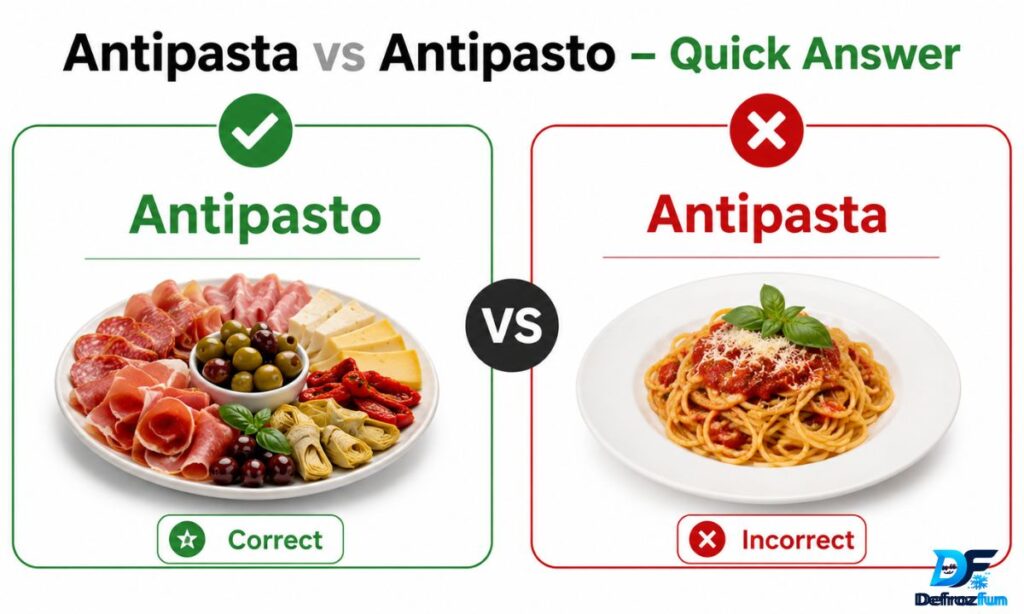
| Term | Correct? | Meaning |
| Antipasto | ✅ Yes | Italian word for “before the meal” — a starter course |
| Antipasti | ✅ Yes | Plural form of antipasto (multiple starters) |
| Antipasta | ❌ No | Not a real Italian word — a common English misspelling |
Quick rule: Use antipasto for one dish, antipasti for a spread or platter. Never use antipasta.
Antipasto Meaning
Antipasto is the traditional first course in an Italian meal. It is served before the pasta course (primo) and the main course (secondo). The word comes from Latin roots: anti meaning “before” and pastus meaning “food” or “meal.”
In practice, an antipasto course typically includes:
- Cured meats such as prosciutto, salami, and mortadella
- Aged and fresh cheeses like Parmigiano-Reggiano and mozzarella
- Marinated or pickled vegetables — artichokes, olives, pepperoncini
- Bruschetta, breadsticks, or focaccia
- Preserved items like sun-dried tomatoes, capers, and anchovies
The purpose of antipasto is not to fill the stomach. It is meant to stimulate the appetite and set the tone for the meal ahead. Think of it as the opening act — light, flavorful, and inviting.
The Origin of Antipasto
Antipasto has roots going back to Medieval Italy. Wealthy households in that era would begin feasts with light finger foods — sugared nuts, cured meats, and small savory bites — served before the main courses arrived.
By the Renaissance period, the antipasto course had become a formal part of Italian dining culture. It was a way to display hospitality and signal the quality of the meal to come.
Over centuries, the tradition traveled from noble tables to everyday Italian homes. Today, antipasto is recognized globally as a symbol of Italian culinary heritage — a ritual that values pleasure, community, and good food.
Antipasti Pronunciation
Many people mispronounce antipasto because they associate it with the word “pasta.” Here is how to say it correctly:
- Antipasto → an-tee-PAH-stoh
- Antipasti → an-tee-PAH-stee
Pronunciation Breakdown
| Syllable | Sound |
| an | “an” as in “and” |
| tee | “tee” as in “tea” |
| PAH | stressed, like “pa” |
| stoh | rhymes with “go” |
The key is the stress on PAH — not on “past” or “pasta.” Once you hear it said correctly, it is easy to remember.
Antipasto vs Antipasta Common Misspelling
Antipasta is not an Italian word. It does not appear in Italian dictionaries and has no culinary meaning in Italian cuisine. So where did it come from?
The most likely explanation: English speakers heard antipasto and mentally connected pasto with pasta — the famous Italian food. This led to the word being misheard, misread, or miswritten as antipasta.
Over time, it spread through restaurant menus, food packaging, and casual writing until it felt almost normal. But it remains a mistake.
Why the Confusion Happens
- The ending -a is common in Italian (pizza, pasta, lasagna), so antipasta “sounds” Italian
- People hear antipasto spoken quickly and mishear the final vowel
- Some older American restaurant menus printed antipasta and it became a regional habit
Bottom line: If you see antipasta on a menu in Italy, it’s a typo. In English-language writing, always use antipasto.
Also Read This: Which or Wich: Spelling and Meaning Explained Simply (2026)
Antipasto vs Charcuterie
Antipasto and charcuterie boards look nearly identical at first glance. Both feature cured meats, cheeses, and small bites arranged on a platter or board. But they come from different culinary traditions.
| Feature | Antipasto | Charcuterie |
| Origin | Italy | France |
| Core focus | Meats, cheeses, vegetables, olives | Primarily cured and cooked meats |
| Cheese included? | Yes, always | Traditionally no; added in modern versions |
| Bread/crackers | Bruschetta, focaccia, grissini | Baguette, crackers |
| Vegetables | Common — artichokes, peppers, tomatoes | Less common traditionally |
| Role in meal | Formal first course in Italian dining | Appetizer or snack, often casual |
| Modern usage | Retains traditional meaning | Has expanded broadly — nearly any board |
Key Difference
Charcuterie (shaar-KOO-tree) is French and originally referred only to prepared and cured meats. Antipasto is Italian and always includes a broader spread — meats, cheeses, and vegetables together. In today’s food culture, charcuterie boards have evolved to mean almost any styled appetizer board, while antipasto stays closer to its Italian roots.
Where Antipasto Is Commonly Served
Antipasto appears in many settings, from formal dining to casual gatherings:
- Italian restaurants — as a starter before pasta or the main course
- Wedding receptions and dinner parties — served on large shared platters
- Holiday tables — especially Christmas Eve (Feast of the Seven Fishes) and Easter
- Wine bars and aperitivo hours — paired with wine or Aperol Spritz
- Home entertaining — casual antipasto boards for friends and family
- Delis and grocery stores — packaged antipasto salads and jarred antipasto mixes
In southern Italy, antipasto leans heavily on coastal ingredients — anchovies, fresh mozzarella, ripe tomatoes, and olives. In northern Italy, the spread often features rich cured meats and aged cheeses with pickled vegetables.
Antipasto in Everyday Examples
Seeing the word used correctly in context helps it stick. Here are natural examples:
- “We started the dinner with a beautiful antipasto platter.”
- “The restaurant’s antipasto included prosciutto, olives, and roasted peppers.”
- “She arranged an impressive antipasti spread for the party.”
- “The antipasto was light — just enough to open our appetites.”
- “Can we order the antipasto to share before our mains?”
When to Use Each Form
| Situation | Correct Word |
| One starter dish | Antipasto |
| Multiple starters / a full spread | Antipasti |
| On a menu or in writing | Antipasto (or antipasti) |
| Never use | Antipasta |
Antipasto Recipes & Antipasto Salad
Classic Antipasto Platter
A traditional antipasto board includes:
- Cured meats — prosciutto di Parma, Genoa salami, soppressata
- Cheeses — fresh mozzarella, Parmigiano-Reggiano, provolone
- Marinated vegetables — artichoke hearts, roasted red peppers, giardiniera
- Olives — Castelvetrano, Kalamata, or mixed Italian olives
- Bread — sliced focaccia, grissini (breadsticks), or toasted crostini
- Extras — sun-dried tomatoes, capers, fresh basil, a drizzle of olive oil
Arrange items in clusters on a large board or platter. Vary colors and textures for visual appeal.
Antipasto Salad
Antipasto salad takes the same ingredients and tosses them over greens with a simple Italian dressing. A basic version includes:
- Romaine or mixed greens as the base
- Sliced salami and pepperoni
- Cubed provolone or fresh mozzarella
- Black olives, pepperoncini, cherry tomatoes
- Drained artichoke hearts and roasted red peppers
- Italian vinaigrette (olive oil, red wine vinegar, dried oregano, garlic)
It is a popular potluck dish, easy to scale up, and works as both a side and a light main.
British vs American English

Unlike many food terms that vary between British and American English (coriander vs cilantro, for example), antipasto is consistent across both dialects.
- British English: antipasto ✅
- American English: antipasto ✅
The misspelling antipasta appears in both countries, but it is equally incorrect in both. This is not a regional spelling difference — it is simply a universal error to avoid.
American deli culture has popularized jarred antipasto products and antipasto salads, but the spelling remains the same regardless of which side of the Atlantic you’re on.
Which Spelling Should You Use?
The answer is simple:
- Writing about a single Italian starter dish → antipasto
- Writing about a spread of Italian starters → antipasti
- Plural on a menu or product label → antipasti
- Never → antipasta
If you are writing for a food blog, restaurant menu, recipe card, or social media caption, antipasto and antipasti are the only acceptable spellings. Using antipasta marks the text as inaccurate and undermines credibility with Italian food enthusiasts and knowledgeable readers.
Common Mistakes with Antipasto
Here are the most frequent errors people make — and how to fix them:
Mistake 1: Writing “antipasta”
- ❌ “We had the antipasta before dinner.”
- ✅ “We had the antipasto before dinner.”
Mistake 2: Using “antipasto” for a full spread
- ❌ “She brought antipasto — ten different dishes!”
- ✅ “She brought antipasti — ten different dishes!”
Mistake 3: Pronouncing it like “anti-PAS-ta”
- ❌ an-tee-PAS-ta (rhymes with pasta)
- ✅ an-tee-PAH-stoh
Mistake 4: Treating it as a main course
- Antipasto is always a first course or appetizer — not a meal on its own (though antipasto salad can stand alone).
Mistake 5: Confusing antipasto with charcuterie
- They are similar but not the same. Antipasto is Italian; charcuterie is French. Antipasto always includes cheese and vegetables; traditional charcuterie focuses on meat.
Conclusion
Antipasto is correct. Antipasta is not a real word — it’s a misspelling that has spread through years of mishearing and habit. The term comes from Latin roots meaning “before the meal,” and it refers to the traditional Italian first course of cured meats, cheeses, olives, and marinated vegetables.
Remember:
- Antipasto = one dish
- Antipasti = multiple dishes or a full spread
- Antipasta = always wrong
Whether you’re ordering at a restaurant, building a board for a party, or writing a food article, now you know exactly which word to use — and why it matters.

Daniel Brooks is a passionate writer and digital content creator dedicated to sharing insightful, engaging, and informative articles across multiple niches. With a strong interest in technology, lifestyle, trending topics, and online media, Daniel Brooks focuses on delivering well-researched and reader-friendly content that inspires and informs audiences worldwide.