

You are typing a sentence and suddenly pause — is it which or wich? You are not alone. This tiny spelling question trips up students, professionals, and even fluent English speakers every day. The good news is that the answer is clear, simple, and easy to remember.
This guide breaks down the correct spelling, meaning, origin, and usage of which vs wich so you can write with full confidence, whether it is an email, an essay, or a social media post.
Which or Wich – Quick Answer
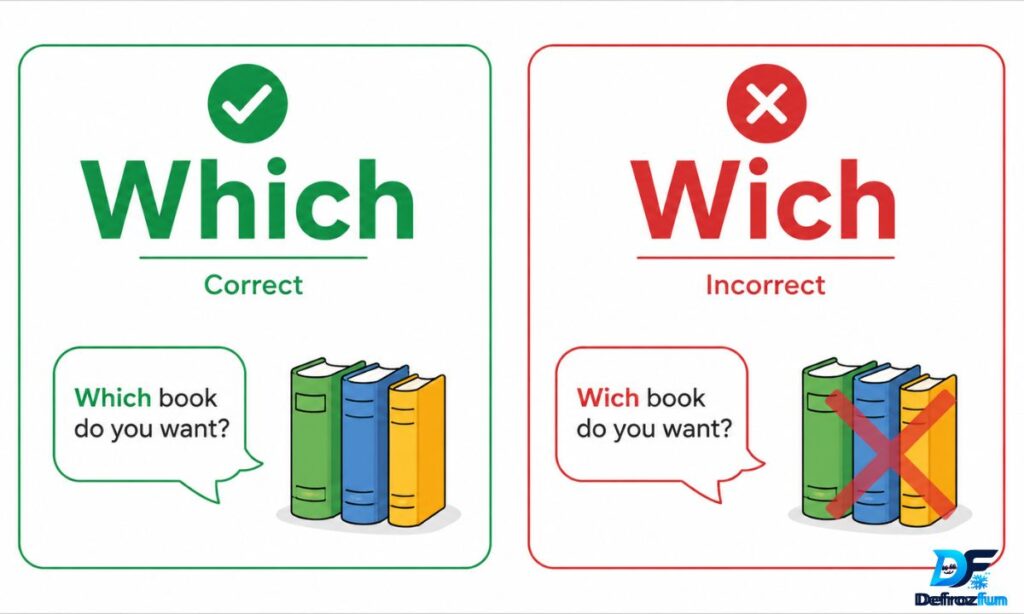
Which is the correct spelling. Always. In standard English writing, wich is simply a misspelling. There is no grammar rule, regional variation, or style guide that allows wich as a substitute for which in regular sentences.
Use which when you are asking a question, introducing a clause, or referring to a specific thing. For example: “Which route is faster?” or “The book, which I borrowed last week, was excellent.” In both cases, only which is correct.
The Origin of Which or Wich
The word which traces back to Old English hwilc, meaning “what kind” or “what one.” As the English language evolved over centuries, the spelling shifted and the silent letters settled into place, giving us the modern form: which.
The form wich, on the other hand, has a different and much narrower history. It comes from the Anglo-Saxon suffix -wic, which referred to a settlement, harbor, or place of trade. This is why it survives today only in place names like:
- Norwich – a city in eastern England
- Sandwich – a town in Kent, England
- Greenwich – a borough of London
- Ipswich – a county town in Suffolk
In American English, you may also spot -wich used informally as a casual shorthand for “sandwich” in business names and menus, such as “SubWich” or “Wich & Co.” This is purely stylistic and should never be used in formal writing.
Also Read This: Steer or Stear: Correct Spelling, Meaning, and Easy Guide
British English vs American English Spelling
One of the most common questions about which or wich is whether one version belongs to British English and the other to American English. The answer is no.
Both British English and American English use which as the only standard spelling. There is no accepted American variant that drops the h. The word is spelled and used identically on both sides of the Atlantic.
The only context where -wich appears in British writing is in proper nouns and place names, as noted above. In American English, it occasionally appears in informal branding but never in standard grammar.
Which Spelling Should You Use?
The answer is always which. Here is a simple way to remember it: think of the wh- question words in English. They all follow the same pattern:
- What
- When
- Where
- Why
- Who
- Which
Every single one of them starts with wh-, not just w. This pattern makes it easy to catch a spelling error before you send it.
Use which in the following situations:
As an interrogative pronoun: “Which dress should I wear?”
As a relative pronoun: “The report, which she submitted yesterday, was excellent.”
To introduce a clause: “He chose the route which saved the most time.”
In all of these cases, wich would be a misspelling that could make your writing look careless or unprofessional.
Common Mistakes with Which or Wich
Most people do not confuse which and wich because they think they mean different things. The error is usually a typo. Here are the most common reasons it happens:
- Fast typing on a phone keyboard skips the h
- Autocorrect sometimes fails to catch the error
- Non-native English speakers unfamiliar with the wh- pattern
- Informal texting habits carrying over into formal writing
Another common mistake is confusing which with witch. These two words sound identical (both are pronounced /wɪtʃ/) but have completely different meanings. Witch refers to a person who practices magic. Which is a pronoun. Mixing them up in writing is a more noticeable error than simply dropping the h.
A third mistake involves using which vs that incorrectly. Which is typically used for non-restrictive clauses (with a comma), while that is used for restrictive clauses (without a comma). For example:
Correct: “The car, which is red, belongs to my neighbor.” (non-restrictive)
Correct: “The car that is red belongs to my neighbor.” (restrictive)
Which or Wich in Everyday Examples
Seeing which used correctly in real sentences helps reinforce the correct spelling. Here are practical examples across different contexts:
Emails: “Please let me know which date works best for the meeting.”
Academic writing: “The study, which was conducted over two years, produced significant results.”
Everyday conversation: “Which coffee do you want — black or with milk?”
News and reporting: “The policy, which was approved last month, takes effect in January.”
Social media: “Which of these photos should I post?”
Now here are the same sentences with the incorrect spelling, so you can see exactly what to avoid:
- “Please let me know wich date works best.” ❌
- “The study, wich was conducted over two years…” ❌
- “Wich coffee do you want?” ❌
The incorrect versions are immediately noticeable and reduce the credibility of your writing.
Which or Wich – Google Trends & Usage Data
Search data from Google Trends shows that queries like “which or wich spelling” and “is it wich or which” spike regularly, particularly during academic months and exam seasons. The searches are most common in countries where English is a second language, including India, Pakistan, the Philippines, and parts of Africa.
In published writing tracked by tools like Google Ngram Viewer, which appears millions of times more frequently than wich. The word wich essentially does not appear in formal published text except in proper nouns.
This data confirms two things. First, the confusion is widespread enough that many people actively search for the correct spelling. Second, the answer is universally agreed upon — which is always the correct word in standard English writing.
Which or Wich Comparison Table
| Feature | Details |
| Correct spelling | Which |
| Incorrect spelling | Wich (in standard English) |
| Word type | Pronoun, determiner |
| Pronunciation | /wɪtʃ/ (same as witch) |
| Old English origin | hwilc – meaning ‘what kind’ |
| Used in British English? | Yes – which only |
| Used in American English? | Yes – which only |
| -wich in place names? | Yes (Norwich, Sandwich, Greenwich) |
| Informal sandwich shorthand? | Sometimes in American branding only |
| Common error type | Typo or fast typing |
| Sounds like | Witch (homophones) |
FAQs
Is wich ever correct in English? Only in place names like Norwich or Sandwich, and in informal American sandwich branding. Never in regular grammar.
Why do people write wich instead of which? It is usually a typo caused by fast typing or phone keyboard errors, not a deliberate word choice.
Are which and witch the same word? No. They sound the same but mean completely different things — which is a pronoun; witch refers to a magical person.
Is which spelled differently in British English? No. Both British and American English spell it which, with no variation.
How do I remember the correct spelling? Think of the wh- family: what, when, where, why, who — which follows the same pattern.
Can I use wich in informal texts? It is best avoided even in casual writing, as it looks like a typo rather than a deliberate choice.
What is the difference between which and that? Which is used in non-restrictive clauses (with a comma); that is used in restrictive clauses (no comma).
Conclusion
The confusion between which or wich is one of the most common spelling questions in English, and the answer could not be simpler: which is always the correct spelling. Wich only has a place in historical British place names and the occasional informal sandwich brand.
Whether you are writing a professional email, a school assignment, or a quick social media caption, remember the wh- rule: what, when, where, why, who, which. They all start the same way, and none of them drop the h.
Mastering small spelling details like this builds trust in your writing and keeps your content polished, clear, and professional. When in doubt, use which — and move on with confidence.

Daniel Brooks is a passionate writer and digital content creator dedicated to sharing insightful, engaging, and informative articles across multiple niches. With a strong interest in technology, lifestyle, trending topics, and online media, Daniel Brooks focuses on delivering well-researched and reader-friendly content that inspires and informs audiences worldwide.