

Prefer vs Perfer: Which Spelling Is Correct? Meaning, Usage & Examples (2026) If you have ever typed "perfer" and second-guessed yourself, you are not alone. This small spelling mix-up shows up more often than most people expect, even among experienced writers. The good news is the answer is simple, and once you know it, you will never get confused again. Prefer or Perfer – Quick Answer Prefer is the correct spelling. Perfer is not a real English word. It is a common typo that happens when writers swap the letters e and r by accident. Word Status Meaning Prefer Correct To like or choose one thing over another Perfer Incorrect Not a recognized English word Quick memory trick: Think of preference. That word starts with pre, just like prefer. If you remember the noun, you will always spell the verb right. The Origin of Prefer The word prefer comes from the Latin verb praeferre, which combines two parts: prae = before ferre = to carry or bear Together, praeferre means "to carry something before others" or "to place something first." This root meaning captures exactly how we use the word today: to put one option ahead of another in your mind. From Latin, the word moved into Old French as preferer, and eventually entered Middle English in its modern form. That Latin root prae is the reason the word starts with pre, not per. The spelling perfer has never existed at any stage of the word's history. British English vs American English Spelling Some spelling differences between British and American English cause real confusion, such as colour vs color or organise vs organize. But prefer is not one of them. Both British English and American English use exactly the same spelling: prefer. Variant Spelling Correct? American English prefer Yes British English prefer Yes Any English dialect perfer No There are no regional exceptions here. No matter where you are writing, whether for a US audience, a UK publication, or an international platform, prefer is always the right choice. Which Spelling Should You Use? Always use prefer. There is no situation in standard English, formal or informal, written or spoken, where perfer is acceptable. Use prefer when: Expressing a personal choice between two or more options Writing academic essays, emails, or professional documents Posting on social media or messaging apps Speaking in everyday conversation The verb prefer follows standard English conjugation rules: Subject Form Example I / You / We / They prefer I prefer tea. He / She / It prefers She prefers coffee. Past tense preferred He preferred the window seat. Present participle preferring I am preferring this option. Note: When adding -red or -ring, double the final r: preferred, preferring. Common Mistakes with Prefer Spelling is just one area where writers slip up with this word. Here are the most frequent errors and how to fix them: 1. Writing "perfer" instead of "prefer" This is a phonetic typo. The r and e get reversed when typing quickly. Wrong: I perfer working from home. Right: I prefer working from home. 2. Using "prefer than" instead of "prefer to" In standard grammar, prefer is followed by to, not than, when comparing two things. Wrong: I prefer coffee than tea. Right: I prefer coffee to tea. 3. Forgetting subject-verb agreement Wrong: She prefer early mornings. Right: She prefers early mornings. 4. Writing "prefered" or "prefering" with a single r The final consonant doubles before a vowel suffix. Wrong: She prefered the blue dress. Right: She preferred the blue dress. 5. Treating "perfer" as a British or alternative spelling It is not. Perfer has never been a valid spelling in any dialect or style guide. Prefer in Everyday Examples Seeing a word in context is one of the best ways to lock in the correct form. Here is how prefer appears across different types of writing: Casual / Everyday Speech I prefer staying in on weekends. Do you prefer cats or dogs? Most of my friends prefer streaming over cable. Professional / Formal Writing We prefer candidates who have hands-on project experience. The committee prefers a written proposal before the meeting. Many researchers prefer qualitative methods for this type of study. Comparing Two Options (prefer... to...) She prefers working early morning to late at night. He prefers the mountains to the beach. They prefer video calls to in-person meetings. With an Infinitive (prefer to + verb) I prefer to review the document before signing. She prefers to cook at home. They prefer to travel light. Prefer – Google Trends & Usage Data Search data gives a clear picture of how this word is used online. "Prefer" is consistently searched across the United States, United Kingdom, Canada, Australia, and India as a spelling and grammar reference. "Perfer" appears almost entirely as a search query from people trying to check if it is correct. It does not appear in published writing. Searches for "prefer vs perfer" tend to spike during exam seasons and periods of heavy academic or professional writing. Grammar tools and spell-checkers uniformly flag perfer as an error. No major dictionary, including Merriam-Webster, Oxford, or Cambridge, recognizes it as a valid word. This pattern confirms that perfer is a typo people make and immediately doubt, not an alternate spelling that has gained acceptance anywhere. Keyword Variations Comparison The base word prefer generates a family of related terms. All of them follow the correct pre spelling: Word Type Example prefer verb (base) I prefer this option. prefers verb (3rd person) He prefers tea. preferred verb (past) She preferred the original. preferring verb (present participle) I am preferring this path. preference noun My preference is clear. preferably adverb Come early, preferably before noon. preferable adjective This route is preferable. None of these forms use per at the start. The pre prefix is consistent across every variation. Conclusion The answer here is clear: prefer is the correct spelling, and perfer is simply a misspelling with no place in correct English. The confusion usually comes from fast typing or relying too much on how the word sounds when spoken quickly. A simple way to remember it: think of the word preference, which clearly starts with pre. Apply that same logic to the verb, and you will always land on prefer. Whether you are writing a professional email, a school assignment, or a social media post, always choose prefer. It is the only form recognized by every major dictionary, grammar guide, and style standard in the English language. Prefer vs Perfer: Which Spelling Is Correct? Meaning, Usage & Examples (2026) If you have ever typed "perfer" and second-guessed yourself, you are not alone. This small spelling mix-up shows up more often than most people expect, even among experienced writers. The good news is the answer is simple, and once you know it, you will never get confused again. Prefer or Perfer – Quick Answer Prefer is the correct spelling. Perfer is not a real English word. It is a common typo that happens when writers swap the letters e and r by accident. Word Status Meaning Prefer Correct To like or choose one thing over another Perfer Incorrect Not a recognized English word Quick memory trick: Think of preference. That word starts with pre, just like prefer. If you remember the noun, you will always spell the verb right. The Origin of Prefer The word prefer comes from the Latin verb praeferre, which combines two parts: prae = before ferre = to carry or bear Together, praeferre means "to carry something before others" or "to place something first." This root meaning captures exactly how we use the word today: to put one option ahead of another in your mind. From Latin, the word moved into Old French as preferer, and eventually entered Middle English in its modern form. That Latin root prae is the reason the word starts with pre, not per. The spelling perfer has never existed at any stage of the word's history. British English vs American English Spelling Some spelling differences between British and American English cause real confusion, such as colour vs color or organise vs organize. But prefer is not one of them. Both British English and American English use exactly the same spelling: prefer. Variant Spelling Correct? American English prefer Yes British English prefer Yes Any English dialect perfer No There are no regional exceptions here. No matter where you are writing, whether for a US audience, a UK publication, or an international platform, prefer is always the right choice. Which Spelling Should You Use? Always use prefer. There is no situation in standard English, formal or informal, written or spoken, where perfer is acceptable. Use prefer when: Expressing a personal choice between two or more options Writing academic essays, emails, or professional documents Posting on social media or messaging apps Speaking in everyday conversation The verb prefer follows standard English conjugation rules: Subject Form Example I / You / We / They prefer I prefer tea. He / She / It prefers She prefers coffee. Past tense preferred He preferred the window seat. Present participle preferring I am preferring this option. Note: When adding -red or -ring, double the final r: preferred, preferring. Common Mistakes with Prefer Spelling is just one area where writers slip up with this word. Here are the most frequent errors and how to fix them: 1. Writing "perfer" instead of "prefer" This is a phonetic typo. The r and e get reversed when typing quickly. Wrong: I perfer working from home. Right: I prefer working from home. 2. Using "prefer than" instead of "prefer to" In standard grammar, prefer is followed by to, not than, when comparing two things. Wrong: I prefer coffee than tea. Right: I prefer coffee to tea. 3. Forgetting subject-verb agreement Wrong: She prefer early mornings. Right: She prefers early mornings. 4. Writing "prefered" or "prefering" with a single r The final consonant doubles before a vowel suffix. Wrong: She prefered the blue dress. Right: She preferred the blue dress. 5. Treating "perfer" as a British or alternative spelling It is not. Perfer has never been a valid spelling in any dialect or style guide. Prefer in Everyday Examples Seeing a word in context is one of the best ways to lock in the correct form. Here is how prefer appears across different types of writing: Casual / Everyday Speech I prefer staying in on weekends. Do you prefer cats or dogs? Most of my friends prefer streaming over cable. Professional / Formal Writing We prefer candidates who have hands-on project experience. The committee prefers a written proposal before the meeting. Many researchers prefer qualitative methods for this type of study. Comparing Two Options (prefer... to...) She prefers working early morning to late at night. He prefers the mountains to the beach. They prefer video calls to in-person meetings. With an Infinitive (prefer to + verb) I prefer to review the document before signing. She prefers to cook at home. They prefer to travel light. Prefer – Google Trends & Usage Data Search data gives a clear picture of how this word is used online. "Prefer" is consistently searched across the United States, United Kingdom, Canada, Australia, and India as a spelling and grammar reference. "Perfer" appears almost entirely as a search query from people trying to check if it is correct. It does not appear in published writing. Searches for "prefer vs perfer" tend to spike during exam seasons and periods of heavy academic or professional writing. Grammar tools and spell-checkers uniformly flag perfer as an error. No major dictionary, including Merriam-Webster, Oxford, or Cambridge, recognizes it as a valid word. This pattern confirms that perfer is a typo people make and immediately doubt, not an alternate spelling that has gained acceptance anywhere. Keyword Variations Comparison The base word prefer generates a family of related terms. All of them follow the correct pre spelling: Word Type Example prefer verb (base) I prefer this option. prefers verb (3rd person) He prefers tea. preferred verb (past) She preferred the original. preferring verb (present participle) I am preferring this path. preference noun My preference is clear. preferably adverb Come early, preferably before noon. preferable adjective This route is preferable. None of these forms use per at the start. The pre prefix is consistent across every variation. Conclusion The answer here is clear: prefer is the correct spelling, and perfer is simply a misspelling with no place in correct English. The confusion usually comes from fast typing or relying too much on how the word sounds when spoken quickly. A simple way to remember it: think of the word preference, which clearly starts with pre. Apply that same logic to the verb, and you will always land on prefer. Whether you are writing a professional email, a school assignment, or a social media post, always choose prefer. It is the only form recognized by every major dictionary, grammar guide, and style standard in the English language.

  • Grammer
  • Prefer vs Perfer: Which Spelling Is Correct? Meaning, Usage & Examples (2026)

    If you have ever typed “perfer” and second-guessed yourself, you are not alone. This small spelling mix-up shows up more often than most people expect, even among experienced writers. The good news is the answer is simple, and once you know it, you will never get confused again.

    Prefer or Perfer – Quick Answer

    Prefer or Perfer – Quick Answer (1)

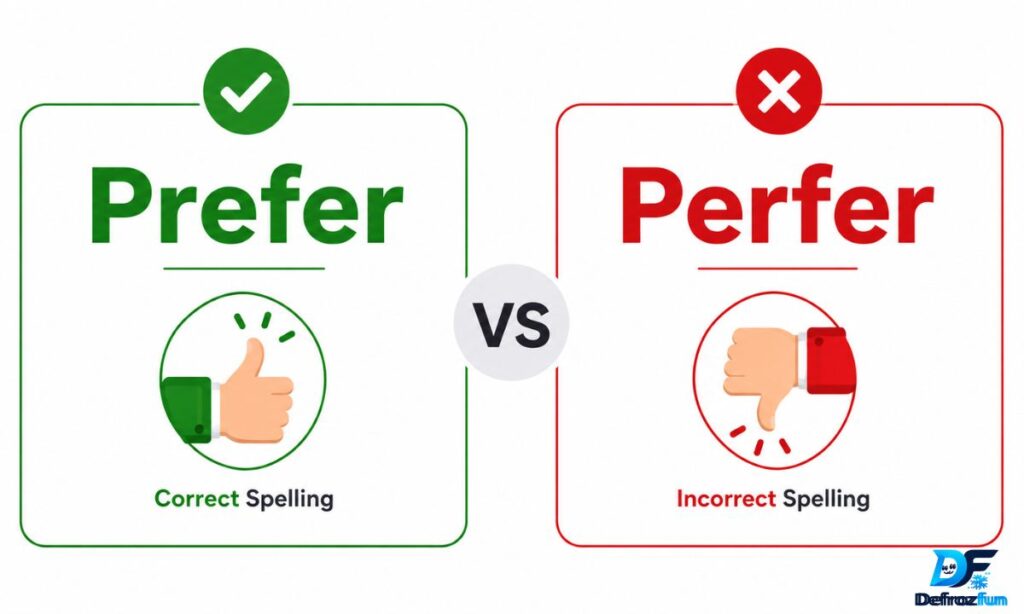
    Prefer is the correct spelling. Perfer is not a real English word. It is a common typo that happens when writers swap the letters e and r by accident.

    WordStatusMeaning
    PreferCorrectTo like or choose one thing over another
    PerferIncorrectNot a recognized English word

    Quick memory trick: Think of preference. That word starts with pre, just like prefer. If you remember the noun, you will always spell the verb right.

    The Origin of Prefer

    The word prefer comes from the Latin verb praeferre, which combines two parts:

    • prae = before
    • ferre = to carry or bear

    Together, praeferre means “to carry something before others” or “to place something first.” This root meaning captures exactly how we use the word today: to put one option ahead of another in your mind.

    From Latin, the word moved into Old French as preferer, and eventually entered Middle English in its modern form. That Latin root prae is the reason the word starts with pre, not per. The spelling perfer has never existed at any stage of the word’s history.

    Also Read This  Likeable or Likable: Which Spelling Is Correct to Use? (2026)

    British English vs American English Spelling

    Some spelling differences between British and American English cause real confusion, such as colour vs color or organise vs organize. But prefer is not one of them.

    Both British English and American English use exactly the same spelling: prefer.

    VariantSpellingCorrect?
    American EnglishpreferYes
    British EnglishpreferYes
    Any English dialectperferNo

    There are no regional exceptions here. No matter where you are writing, whether for a US audience, a UK publication, or an international platform, prefer is always the right choice.

    Which Spelling Should You Use?

    Always use prefer. There is no situation in standard English, formal or informal, written or spoken, where perfer is acceptable.

    Use prefer when:

    • Expressing a personal choice between two or more options
    • Writing academic essays, emails, or professional documents
    • Posting on social media or messaging apps
    • Speaking in everyday conversation

    The verb prefer follows standard English conjugation rules:

    SubjectFormExample
    I / You / We / TheypreferI prefer tea.
    He / She / ItprefersShe prefers coffee.
    Past tensepreferredHe preferred the window seat.
    Present participlepreferringI am preferring this option.

    Note: When adding -red or -ring, double the final r: preferred, preferring.

    Also Read This: Fulfilment vs Fulfillment: Meaning, Difference, Grammar & Correct Usage (2026)

    Common Mistakes with Prefer

    Spelling is just one area where writers slip up with this word. Here are the most frequent errors and how to fix them:

    1. Writing “perfer” instead of “prefer” This is a phonetic typo. The r and e get reversed when typing quickly.

    • Wrong: I perfer working from home.
    • Right: I prefer working from home.
    Also Read This  Bellow or Below – Which One Is Correct? (2026)

    2. Using “prefer than” instead of “prefer to” In standard grammar, prefer is followed by to, not than, when comparing two things.

    • Wrong: I prefer coffee than tea.
    • Right: I prefer coffee to tea.

    3. Forgetting subject-verb agreement

    • Wrong: She prefer early mornings.
    • Right: She prefers early mornings.

    4. Writing “prefered” or “prefering” with a single r The final consonant doubles before a vowel suffix.

    • Wrong: She prefered the blue dress.
    • Right: She preferred the blue dress.

    5. Treating “perfer” as a British or alternative spelling It is not. Perfer has never been a valid spelling in any dialect or style guide.

    Prefer in Everyday Examples

    Seeing a word in context is one of the best ways to lock in the correct form. Here is how prefer appears across different types of writing:

    Casual / Everyday Speech

    • I prefer staying in on weekends.
    • Do you prefer cats or dogs?
    • Most of my friends prefer streaming over cable.

    Professional / Formal Writing

    • We prefer candidates who have hands-on project experience.
    • The committee prefers a written proposal before the meeting.
    • Many researchers prefer qualitative methods for this type of study.

    Comparing Two Options (prefer… to…)

    • She prefers working early morning to late at night.
    • He prefers the mountains to the beach.
    • They prefer video calls to in-person meetings.

    With an Infinitive (prefer to + verb)

    • I prefer to review the document before signing.
    • She prefers to cook at home.
    • They prefer to travel light.

    Prefer – Google Trends & Usage Data

    Search data gives a clear picture of how this word is used online.

    • “Prefer” is consistently searched across the United States, United Kingdom, Canada, Australia, and India as a spelling and grammar reference.
    • “Perfer” appears almost entirely as a search query from people trying to check if it is correct. It does not appear in published writing.
    • Searches for “prefer vs perfer” tend to spike during exam seasons and periods of heavy academic or professional writing.
    • Grammar tools and spell-checkers uniformly flag perfer as an error. No major dictionary, including Merriam-Webster, Oxford, or Cambridge, recognizes it as a valid word.
    Also Read This  Rosy or Rosey: Don't Confuse These Common Words (2026)

    This pattern confirms that perfer is a typo people make and immediately doubt, not an alternate spelling that has gained acceptance anywhere.

    Keyword Variations Comparison

    _Keyword Variations Comparison (1)
    _Keyword Variations Comparison (1)

    The base word prefer generates a family of related terms. All of them follow the correct pre spelling:

    WordTypeExample
    preferverb (base)I prefer this option.
    prefersverb (3rd person)He prefers tea.
    preferredverb (past)She preferred the original.
    preferringverb (present participle)I am preferring this path.
    preferencenounMy preference is clear.
    preferablyadverbCome early, preferably before noon.
    preferableadjectiveThis route is preferable.

    None of these forms use per at the start. The pre prefix is consistent across every variation.

    Conclusion

    The answer here is clear: prefer is the correct spelling, and perfer is simply a misspelling with no place in correct English. The confusion usually comes from fast typing or relying too much on how the word sounds when spoken quickly.

    A simple way to remember it: think of the word preference, which clearly starts with pre. Apply that same logic to the verb, and you will always land on prefer.

    Whether you are writing a professional email, a school assignment, or a social media post, always choose prefer. It is the only form recognized by every major dictionary, grammar guide, and style standard in the English language.

    Daniel Brooks

    Daniel Brooks  is a passionate writer and digital content creator dedicated to sharing insightful, engaging, and informative articles across multiple niches. With a strong interest in technology, lifestyle, trending topics, and online media, Daniel Brooks focuses on delivering well-researched and reader-friendly content that inspires and informs audiences worldwide.


    Leave a Reply

    Your email address will not be published. Required fields are marked *

    6 mins